Landslide Roadway Repair with Retaining Wall and Drainage in Oroville
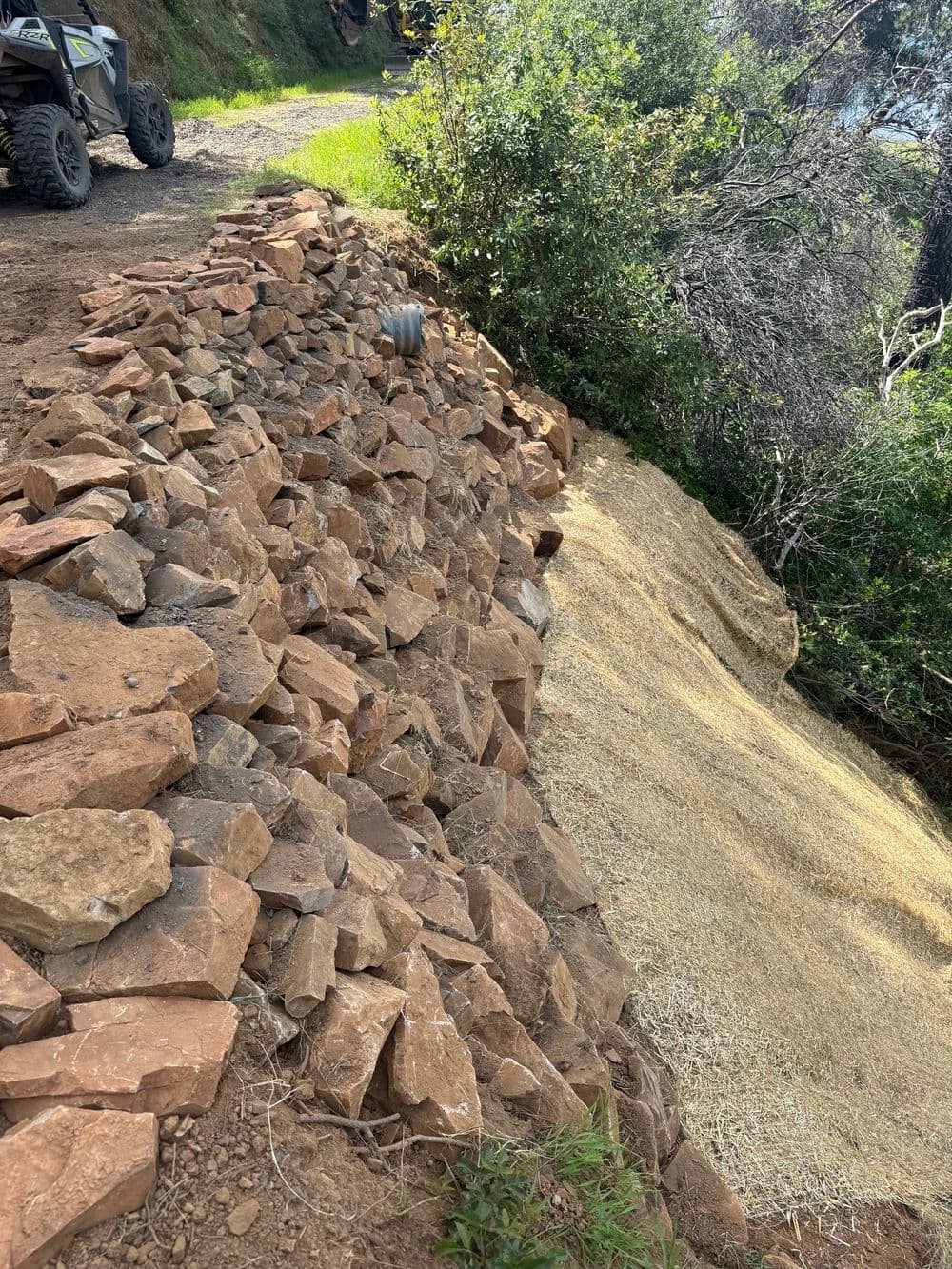
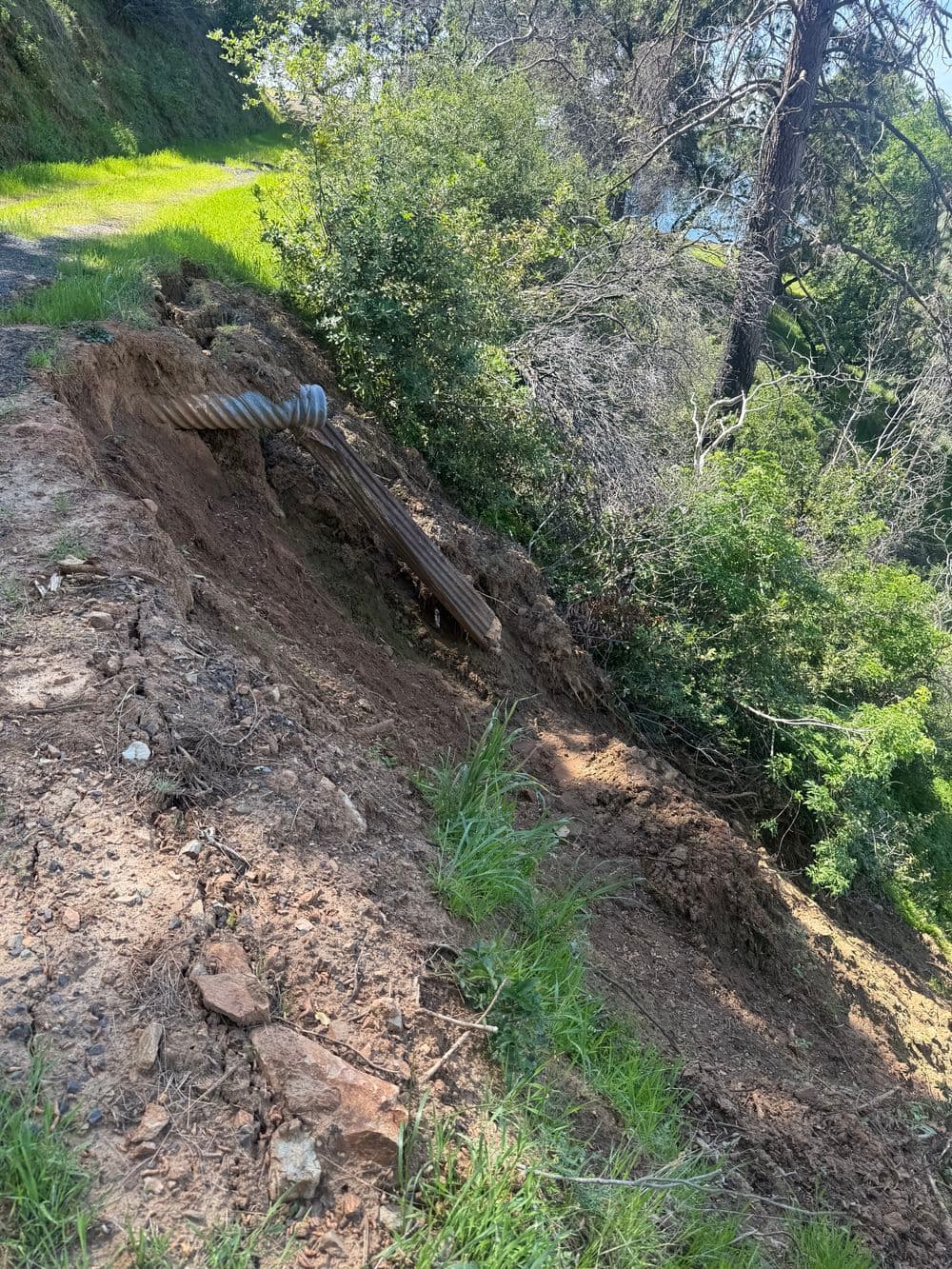
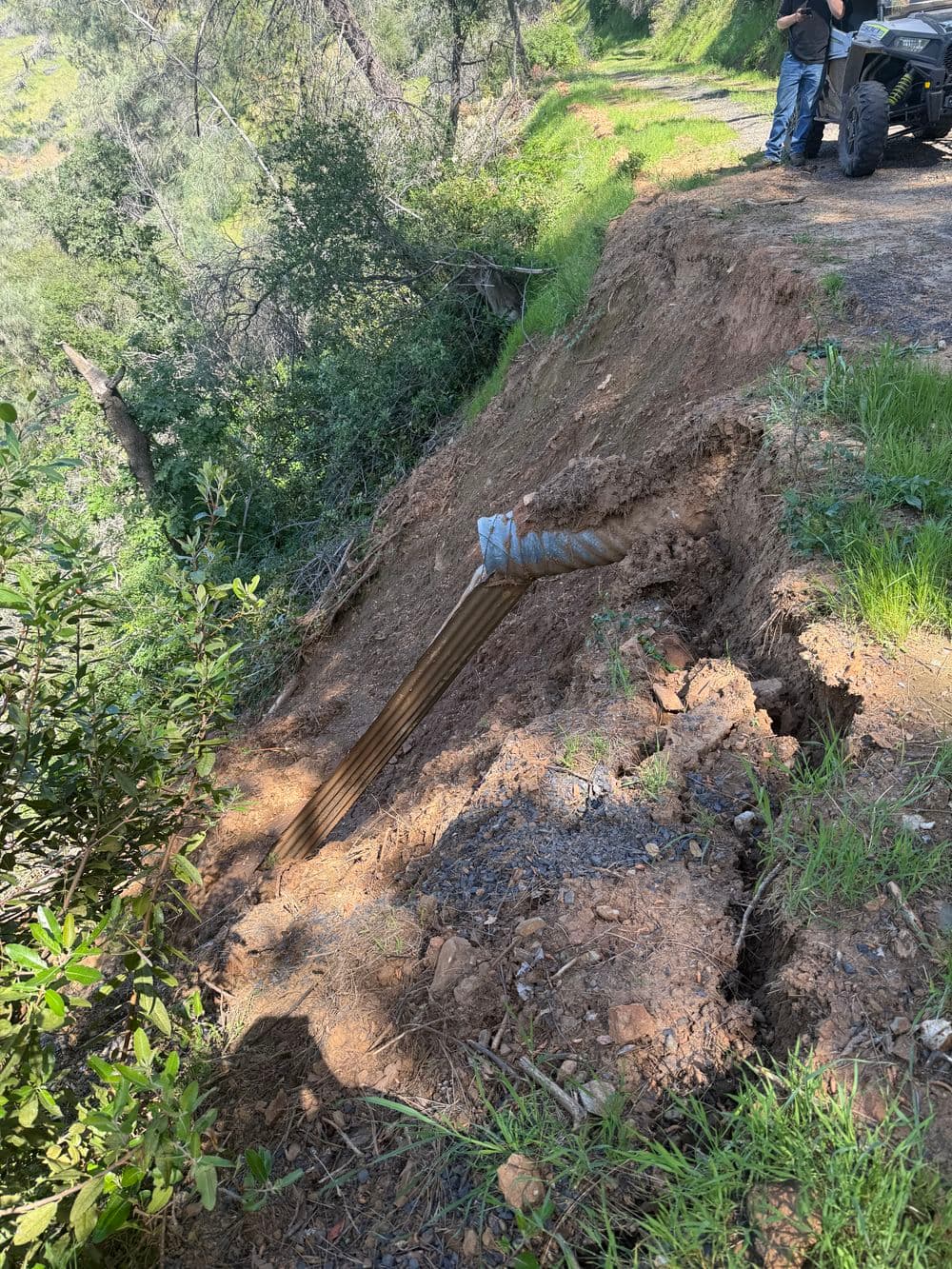
When a landslide takes out a section of private roadway, the clock starts ticking. Every rain event after that makes things worse - undercutting the shoulder further, washing more material downslope, and putting the entire road at risk. That's exactly the situation a client in Oroville faced when they called us in.
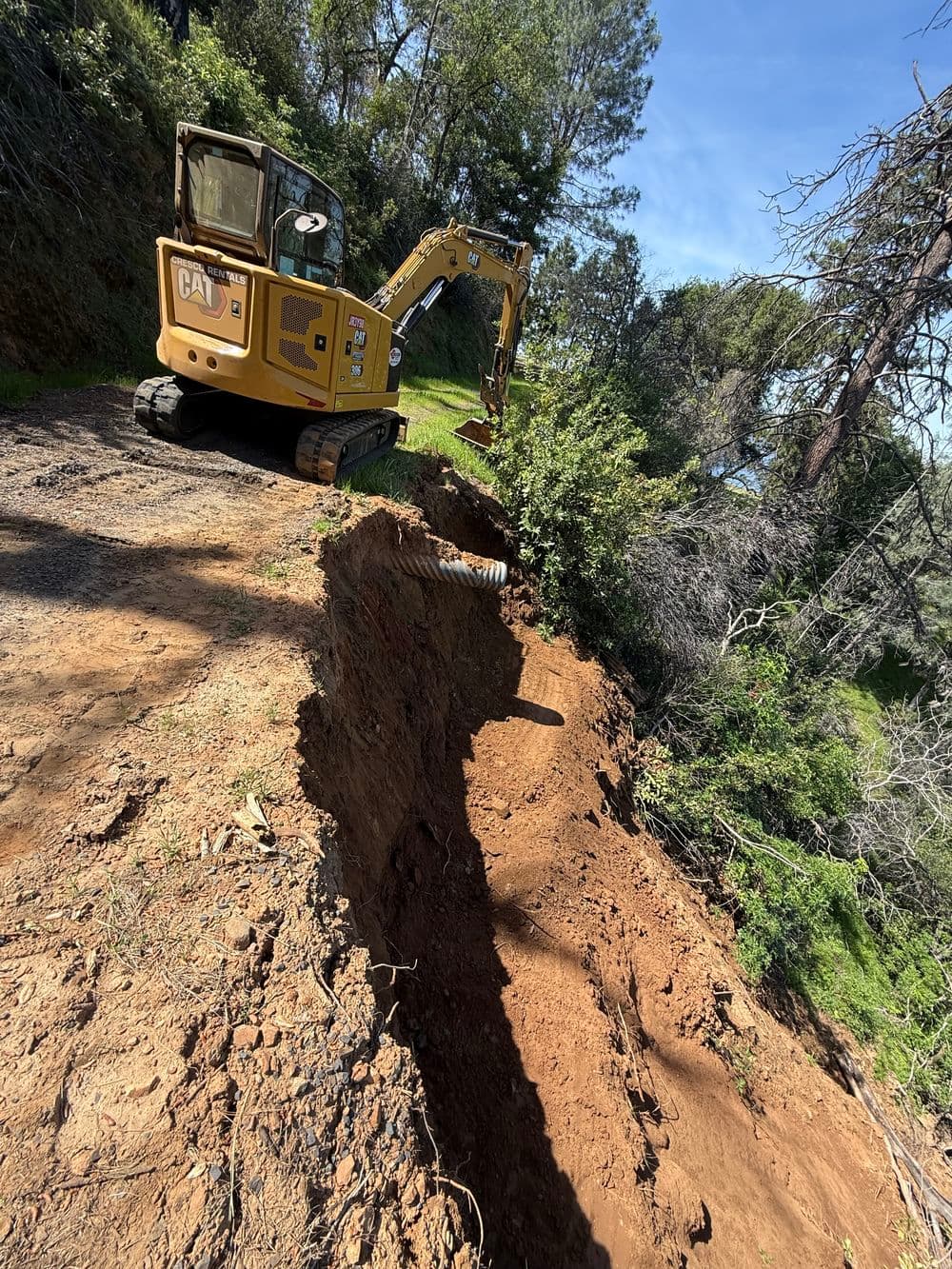
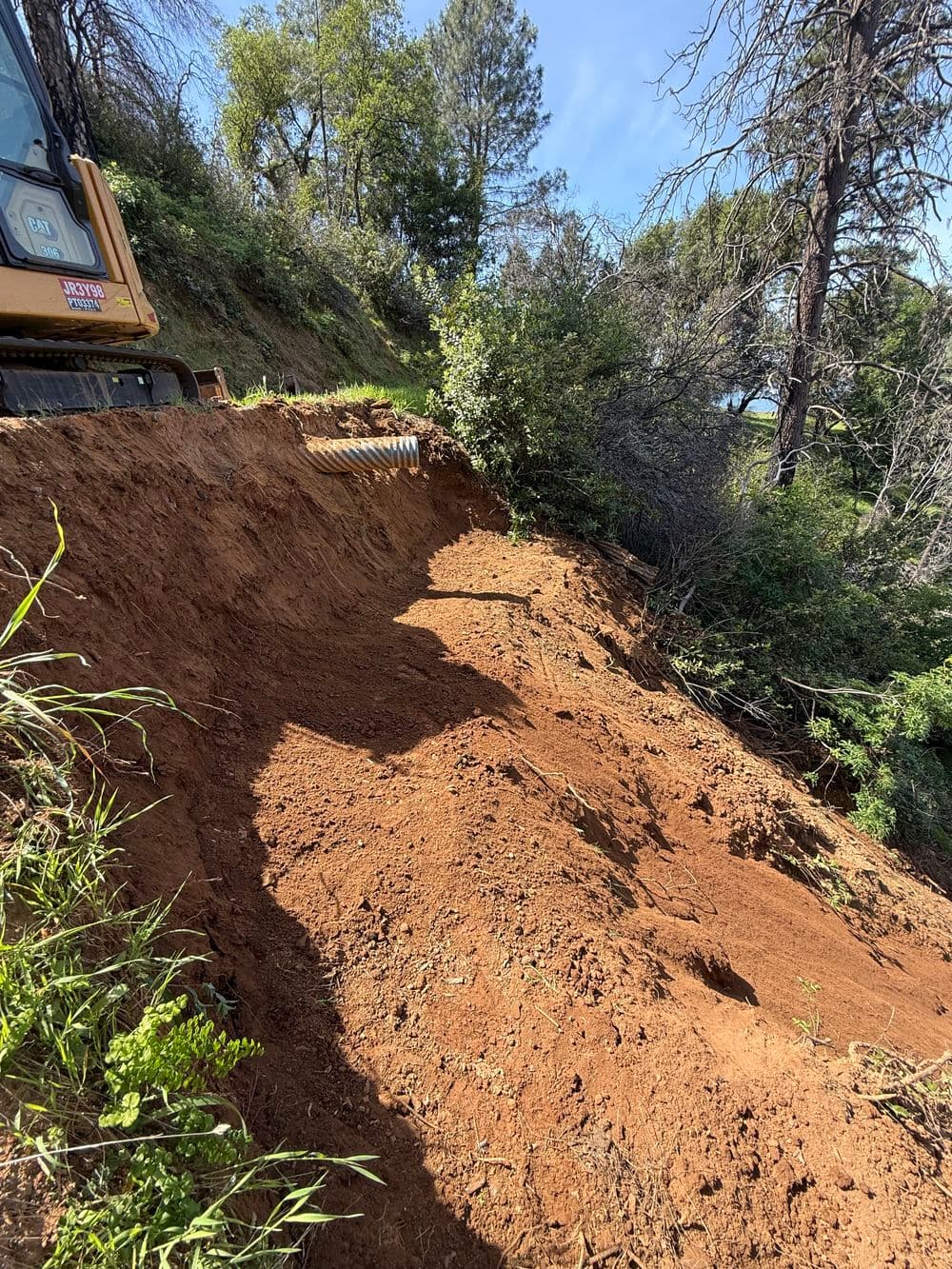
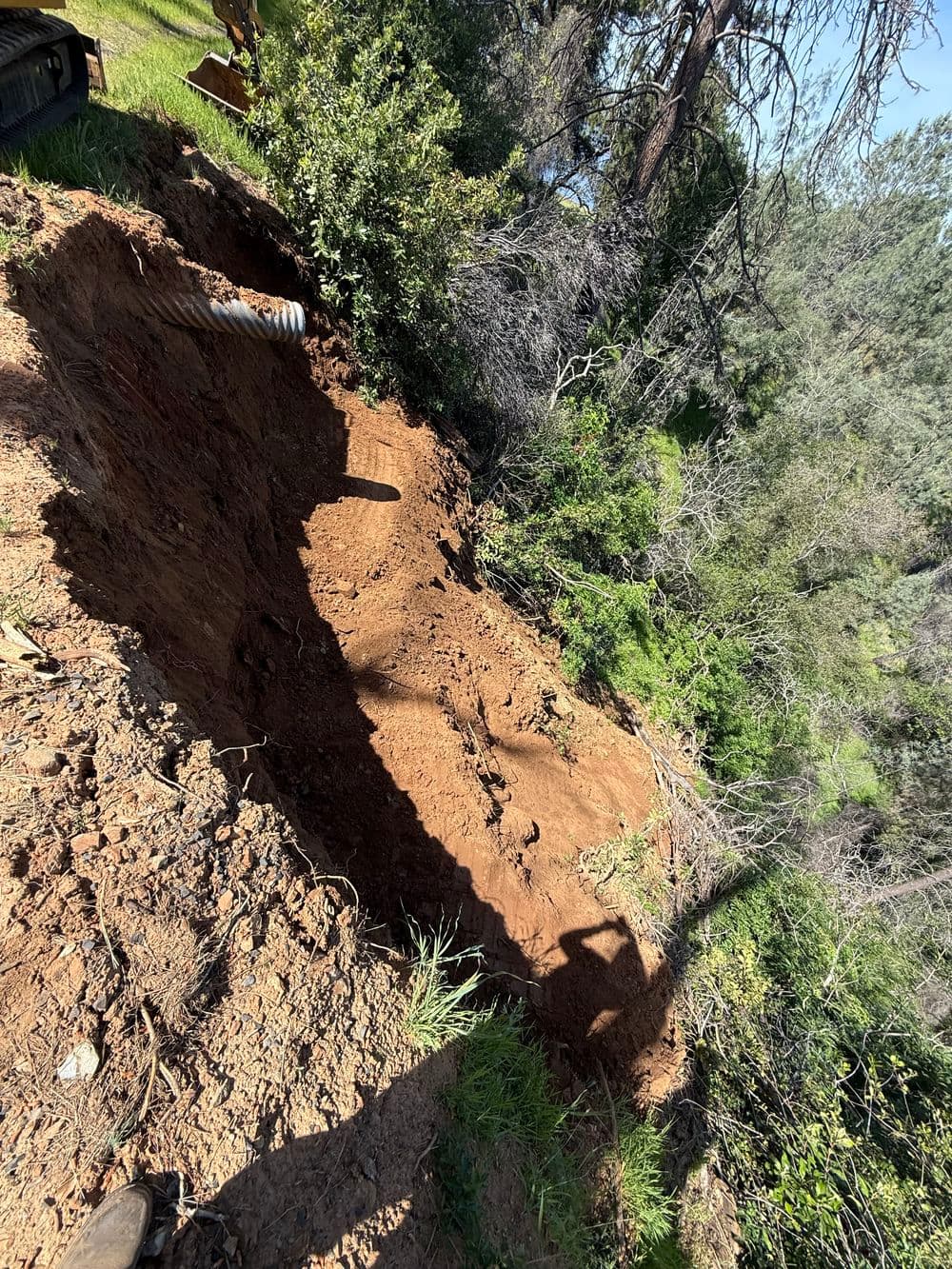
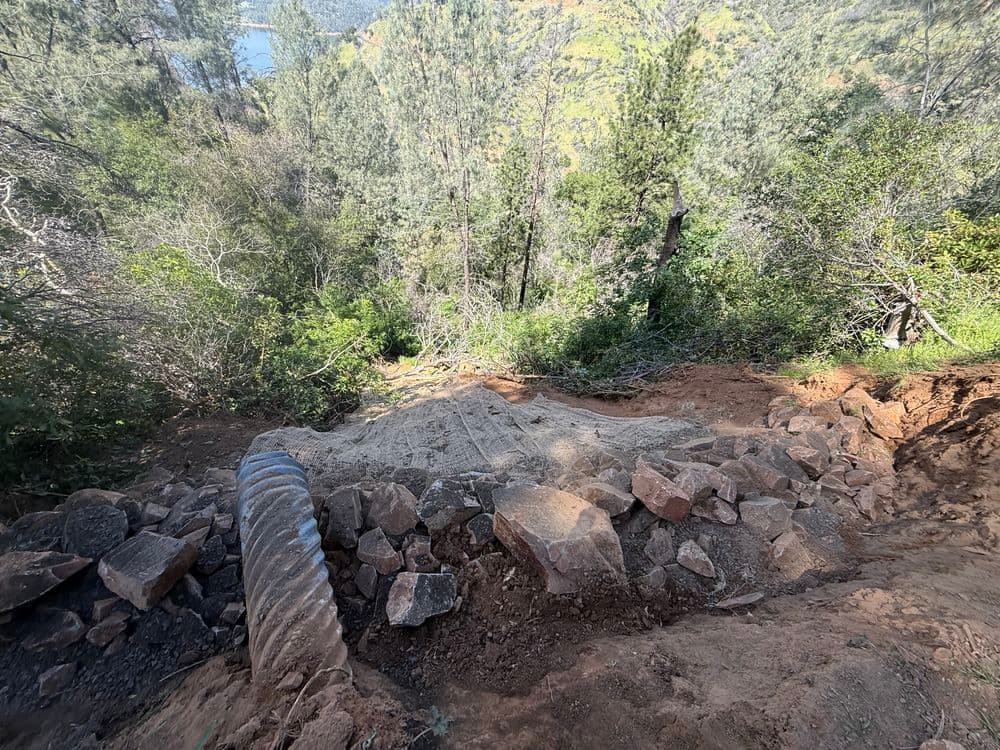
Here's what we were working with: a damaged roadway shoulder sitting on an unstable slope, with existing culverts that weren't moving water the way they needed to. Before anything else, we cut and compacted a solid bench into the native soil. That's the foundation everything else sits on. No point building a wall or grading a shoulder if the ground underneath it isn't stable.
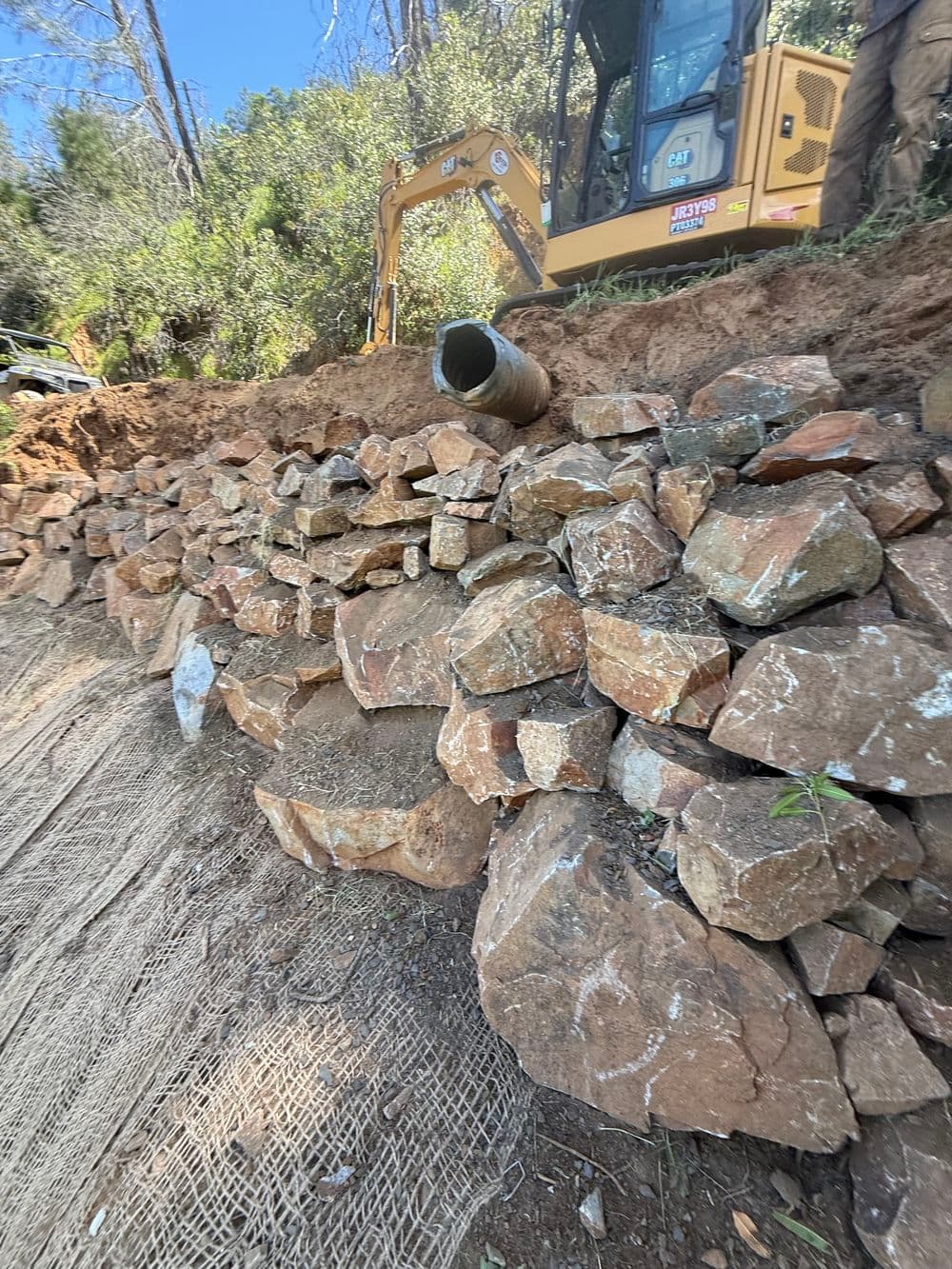
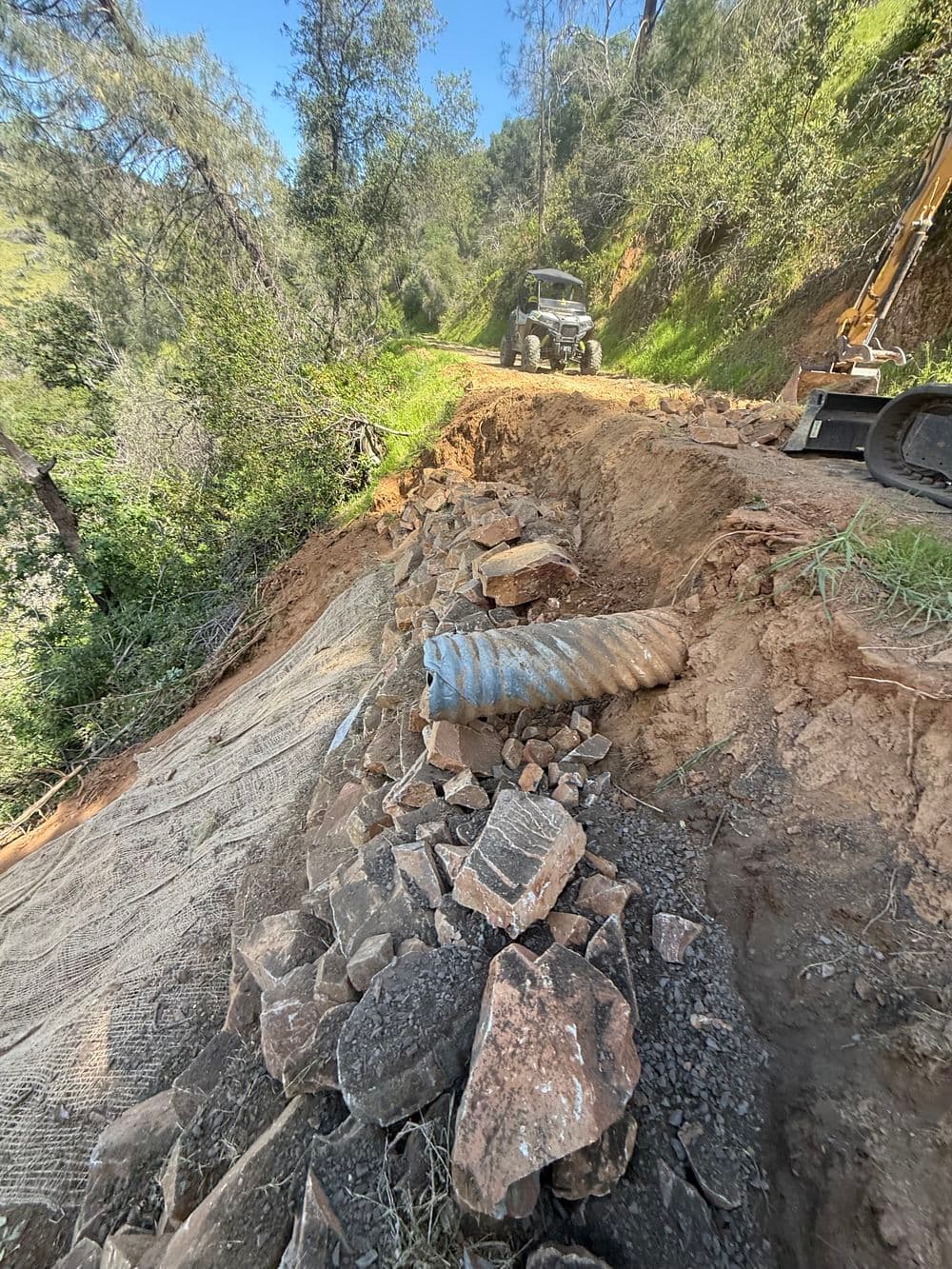
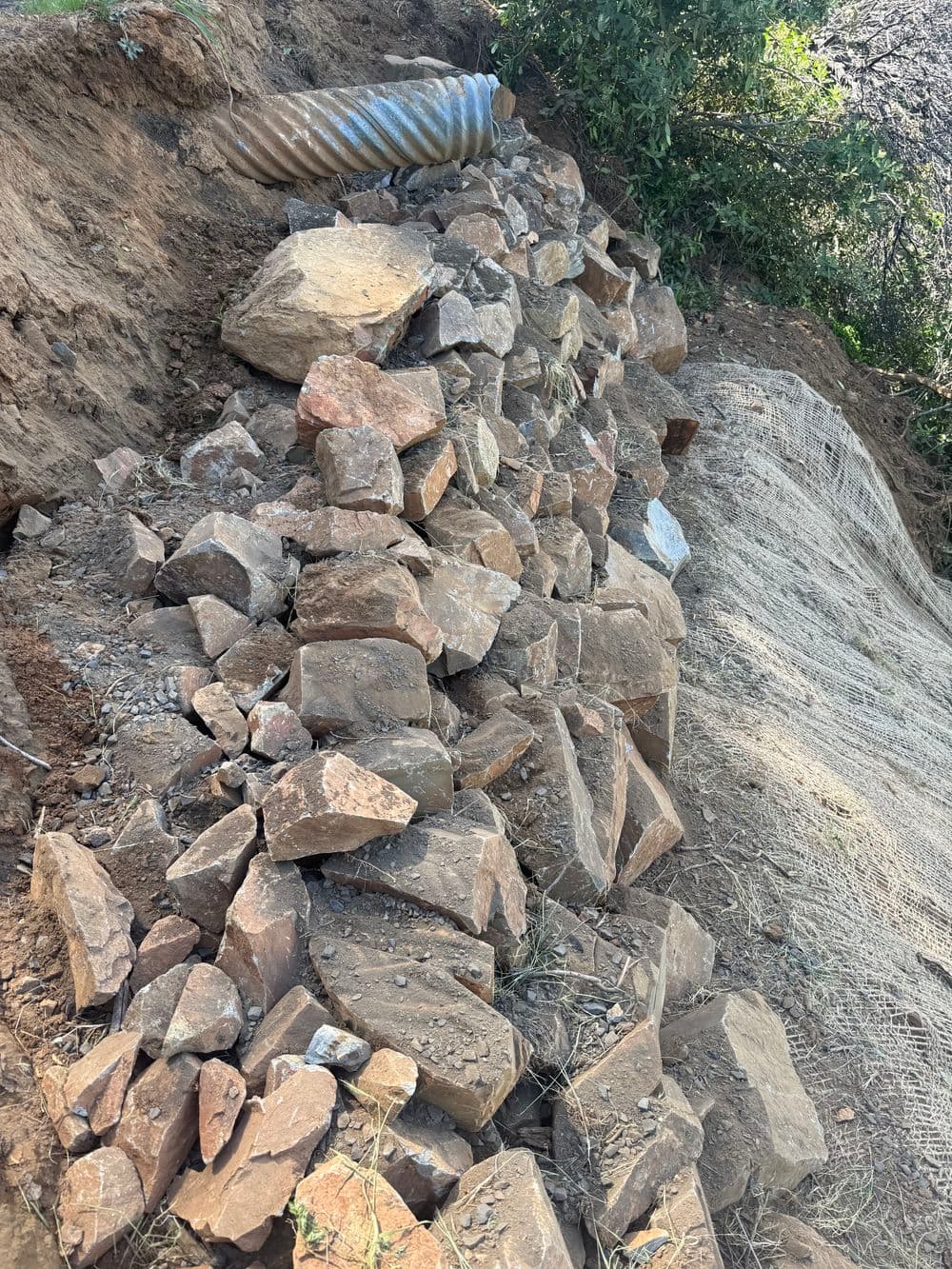
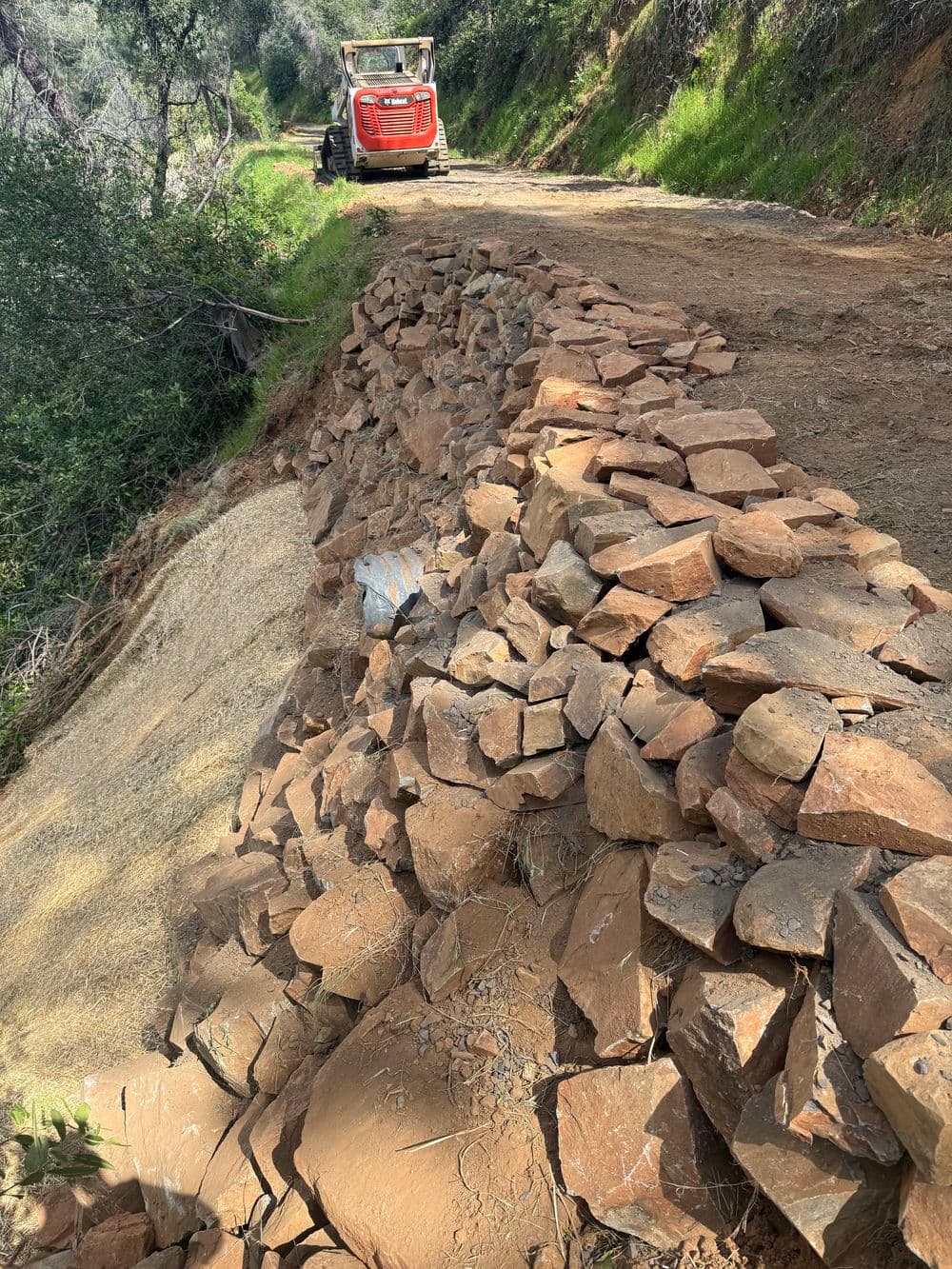
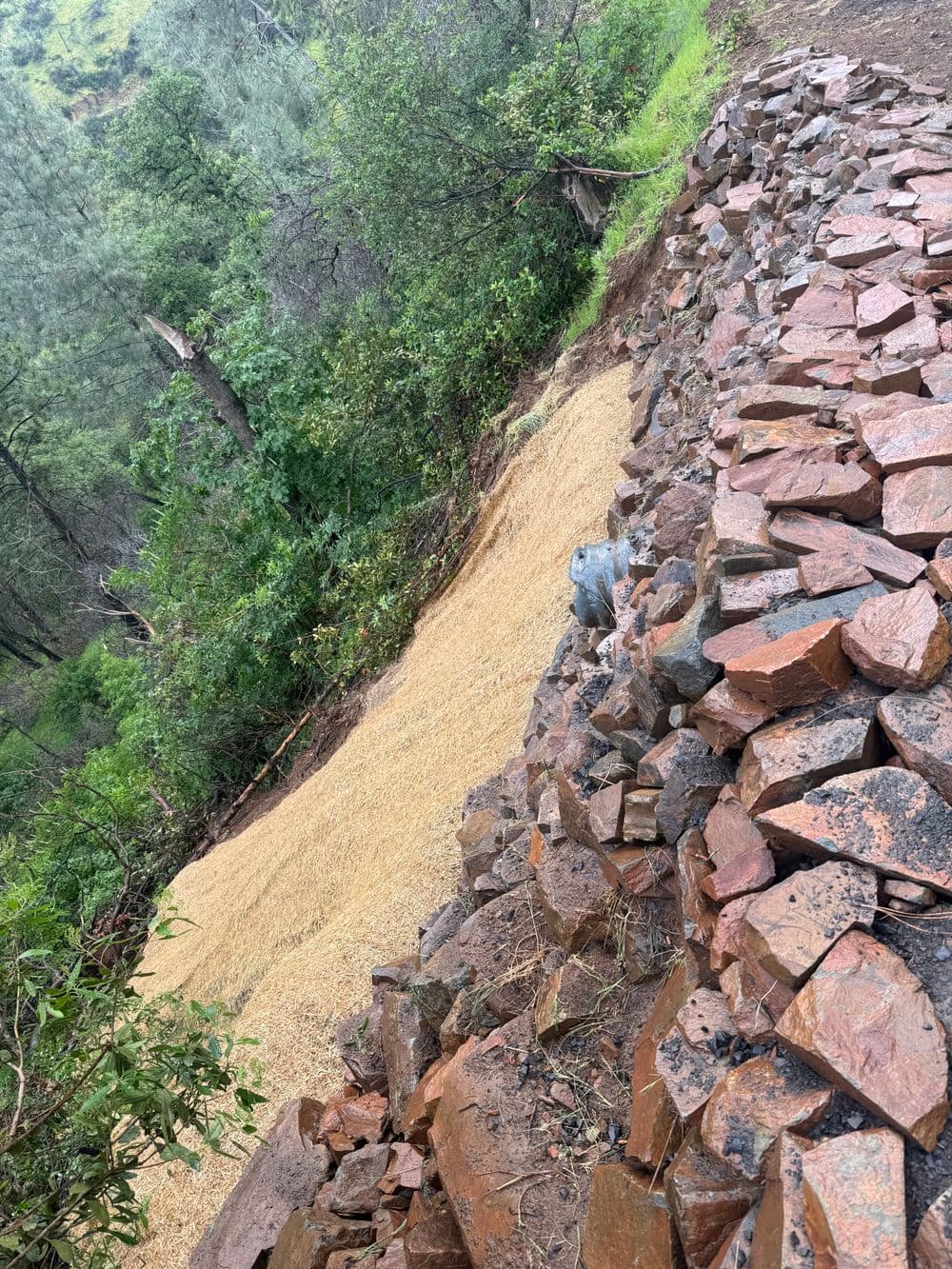
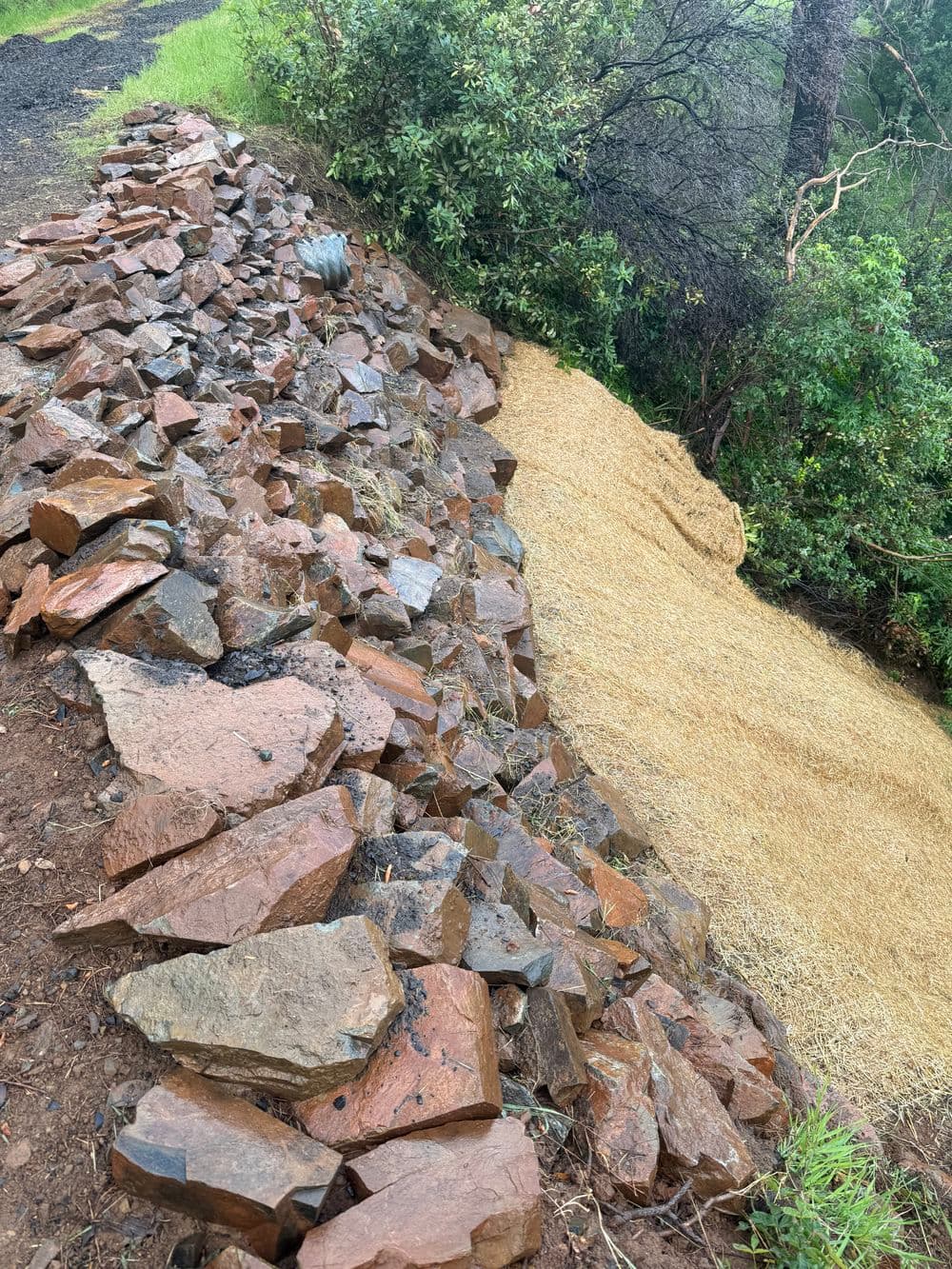
From there, we built a stacked stone retaining wall along the roadway shoulder to hold the rebuilt edge in place. To get proper drainage, we excavated approximately 120 feet of ditch and improved flow through the culverts already on site. Water was the main problem here - give it a controlled path to follow, and it stops creating its own. We also installed hemp fiber jute netting and straw matting over the disturbed slope to hold the soil while vegetation gets established on its own.
One thing that made this job work efficiently was where we sourced the stone. Instead of trucking material in, we pulled it directly from smaller slides along the road. That kept costs down and cleaned up additional problem areas at the same time. It's the kind of thing that only works if you're paying attention to the whole site, not just the one spot you were called out for.
This type of work shows up a lot in foothill and mountain communities around Butte County - steep terrain, unpaved roads, and wet winters are a tough combination. The goal is always the same: build something that holds up through the next rainy season and the one after that, without fighting the land to do it.