Gravel Driveway Regrading and Base Rock Install in Oroville
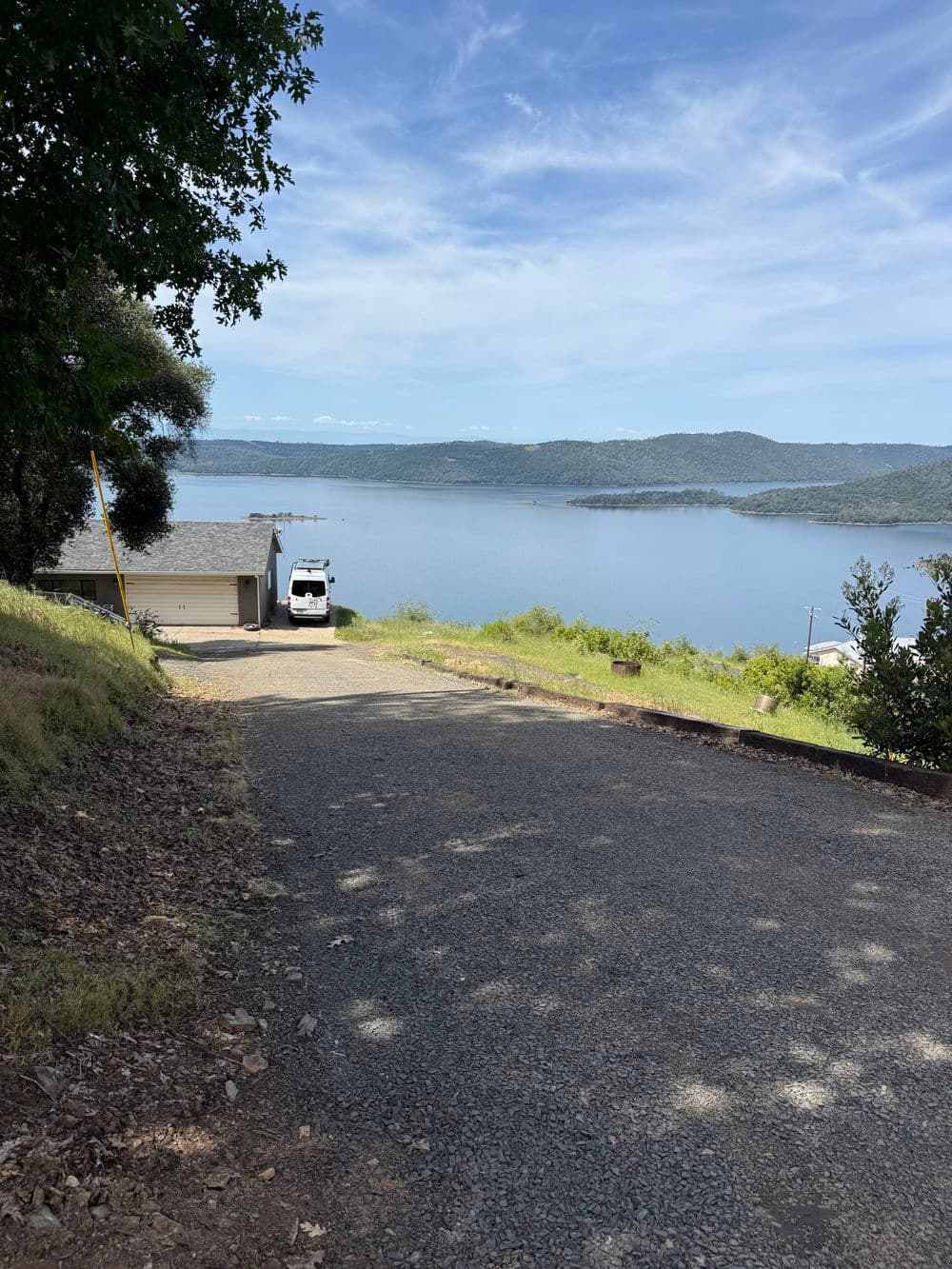
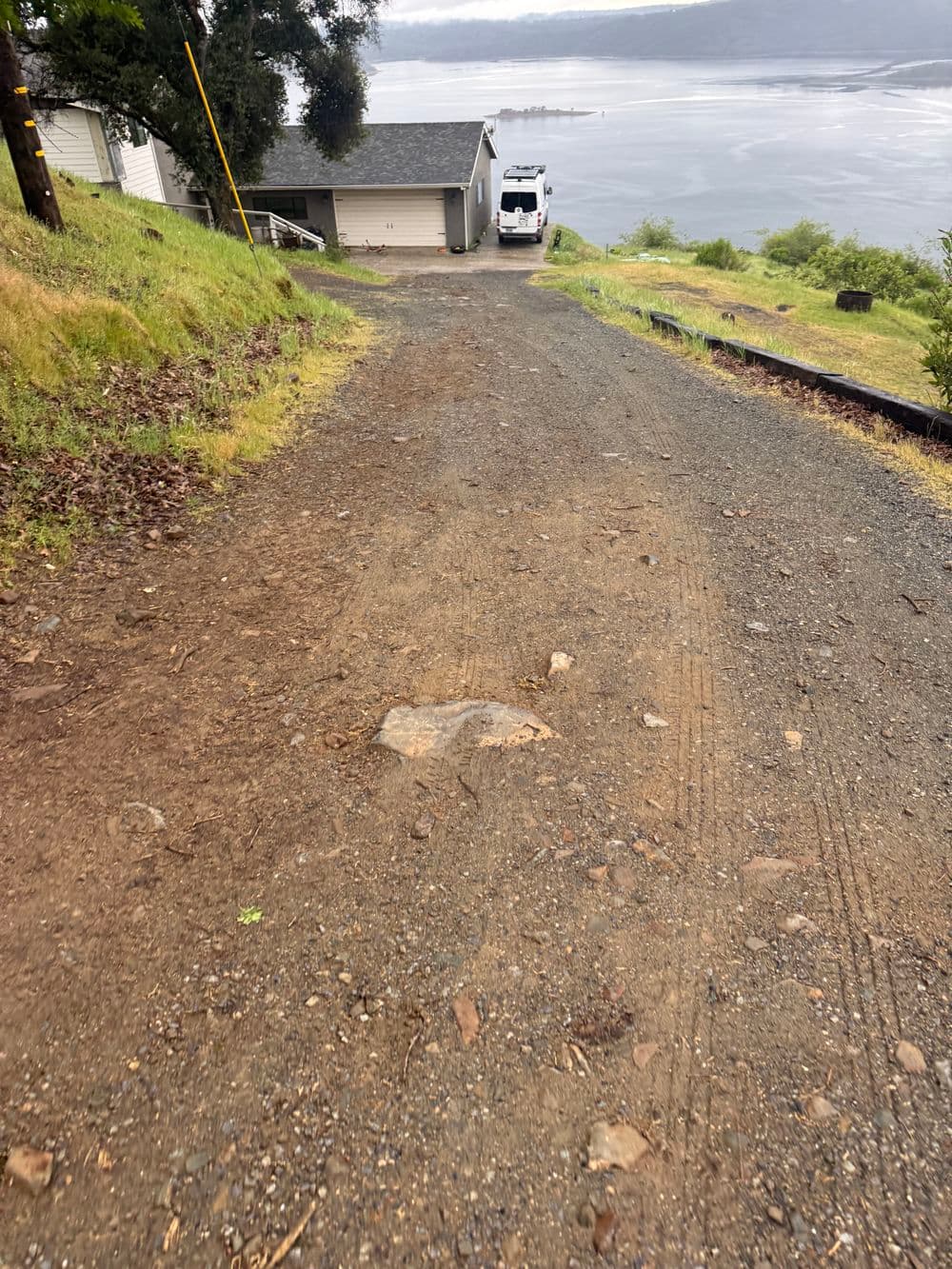
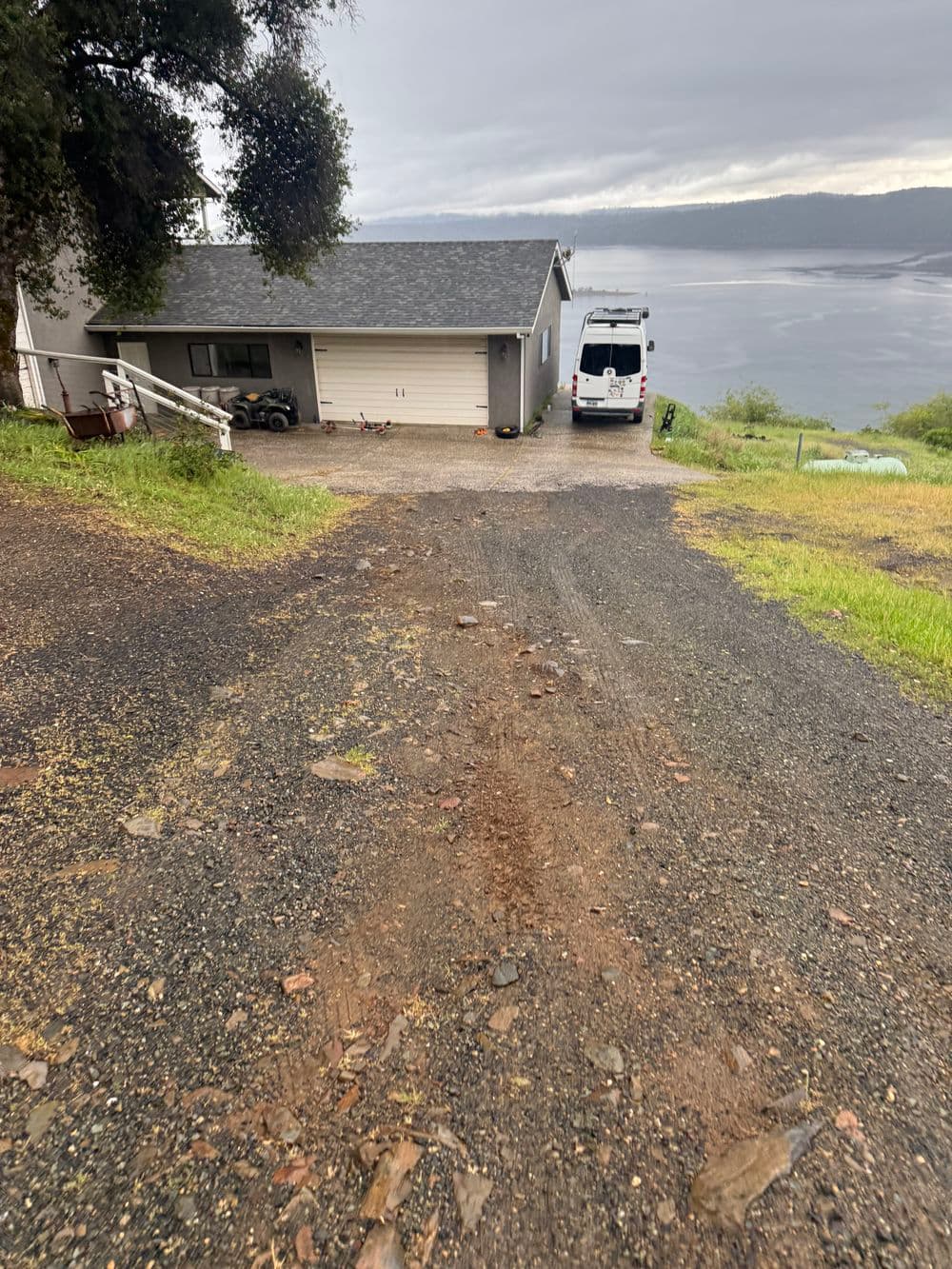
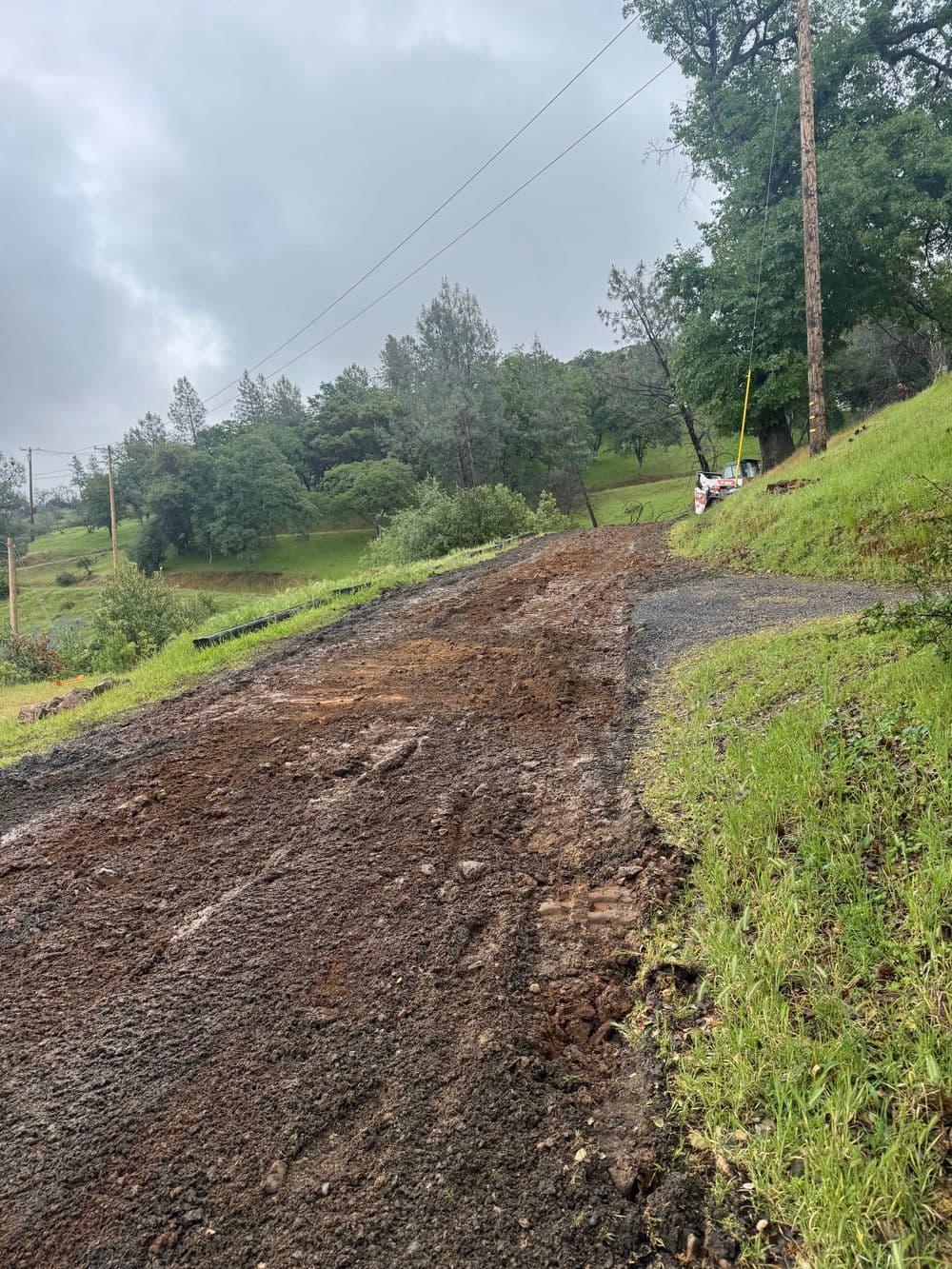
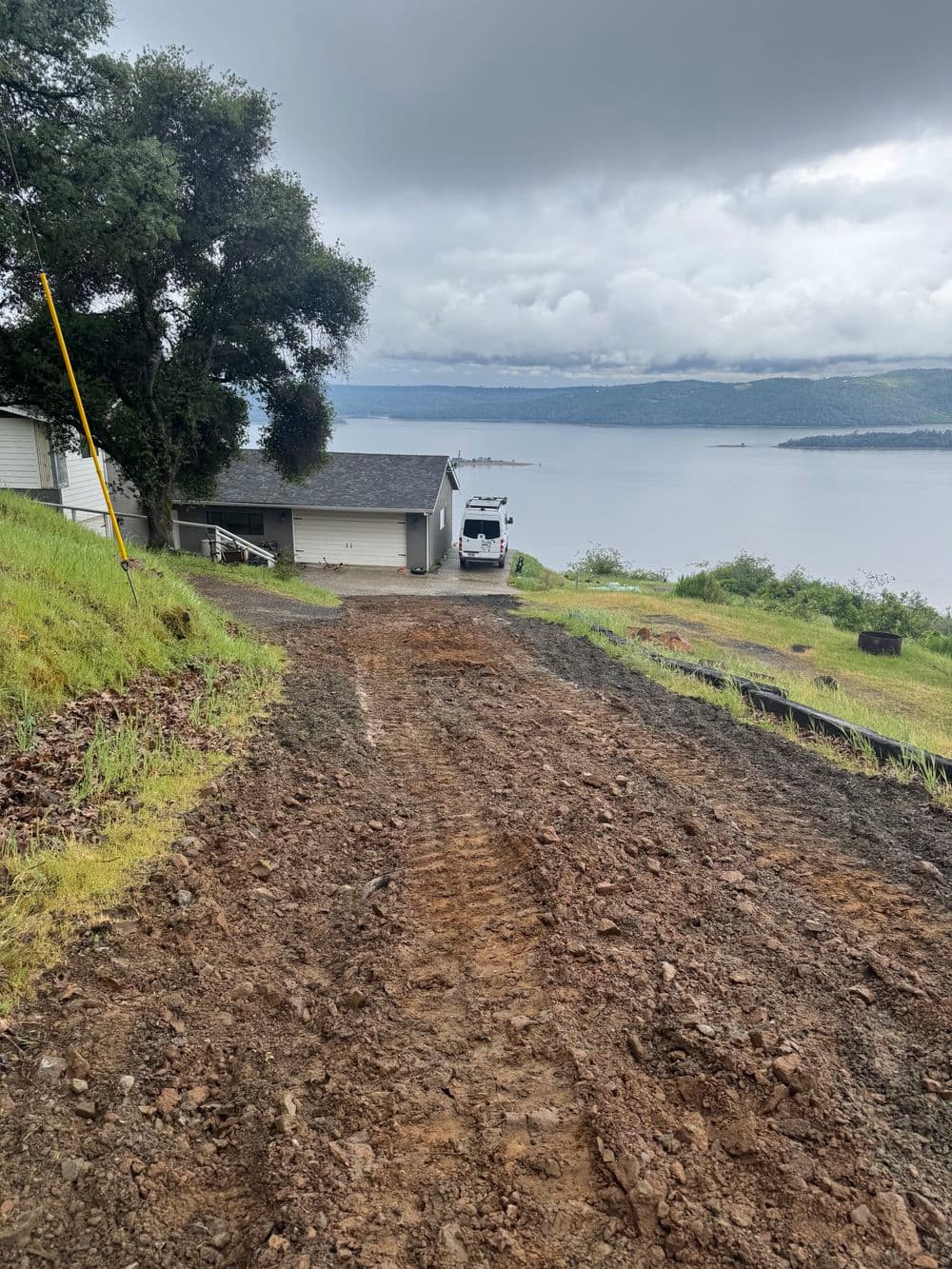
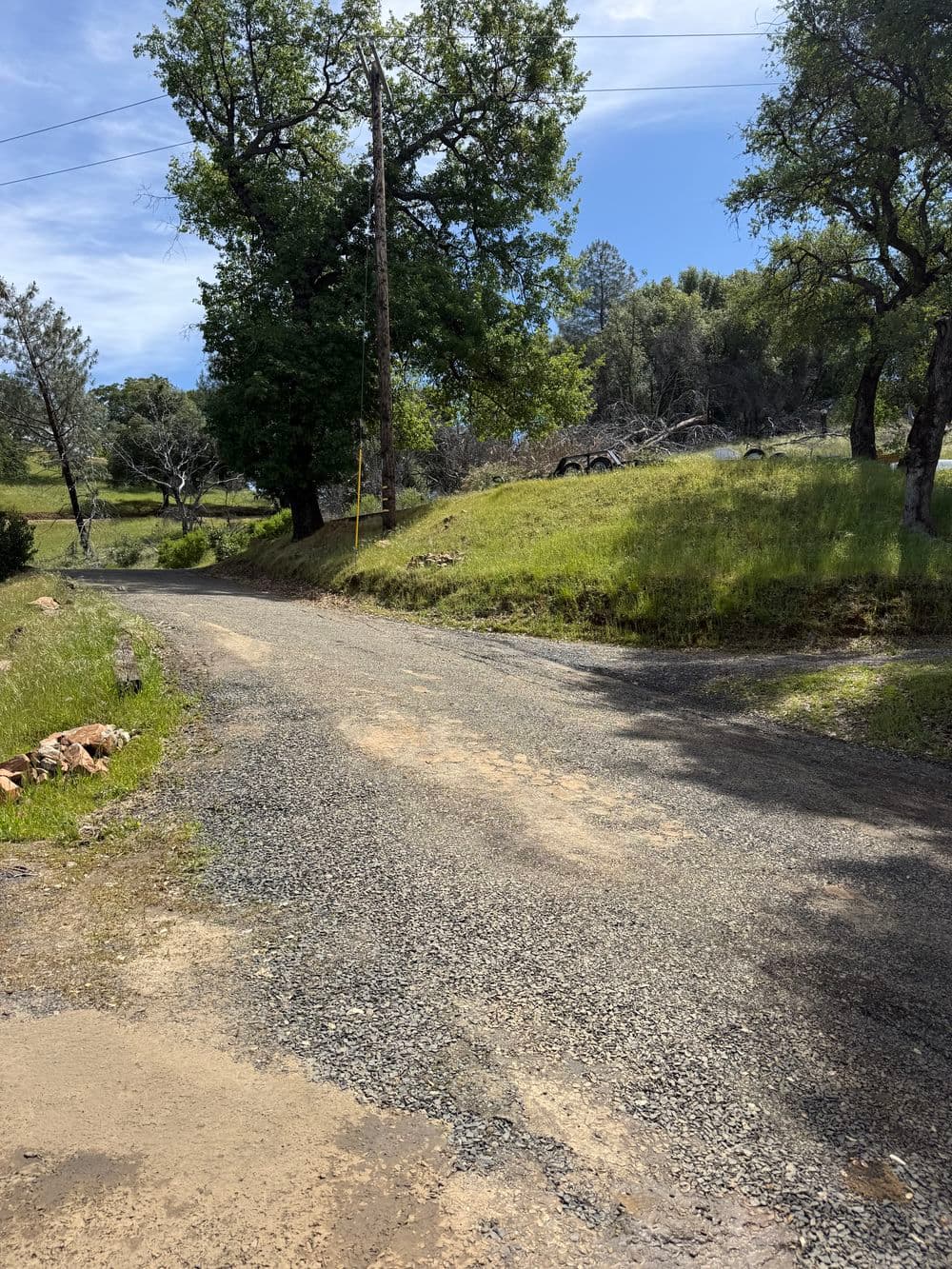
Here's what we were working with - a long hillside driveway with rocks protruding right out of the surface. Not small pebbles either. Chunks of rock sitting up through the ground, scattered across the whole run of the driveway. Every time you drive over them, your vehicle takes the hit. It's also a safety issue and it just makes the whole surface uneven and rough to navigate.
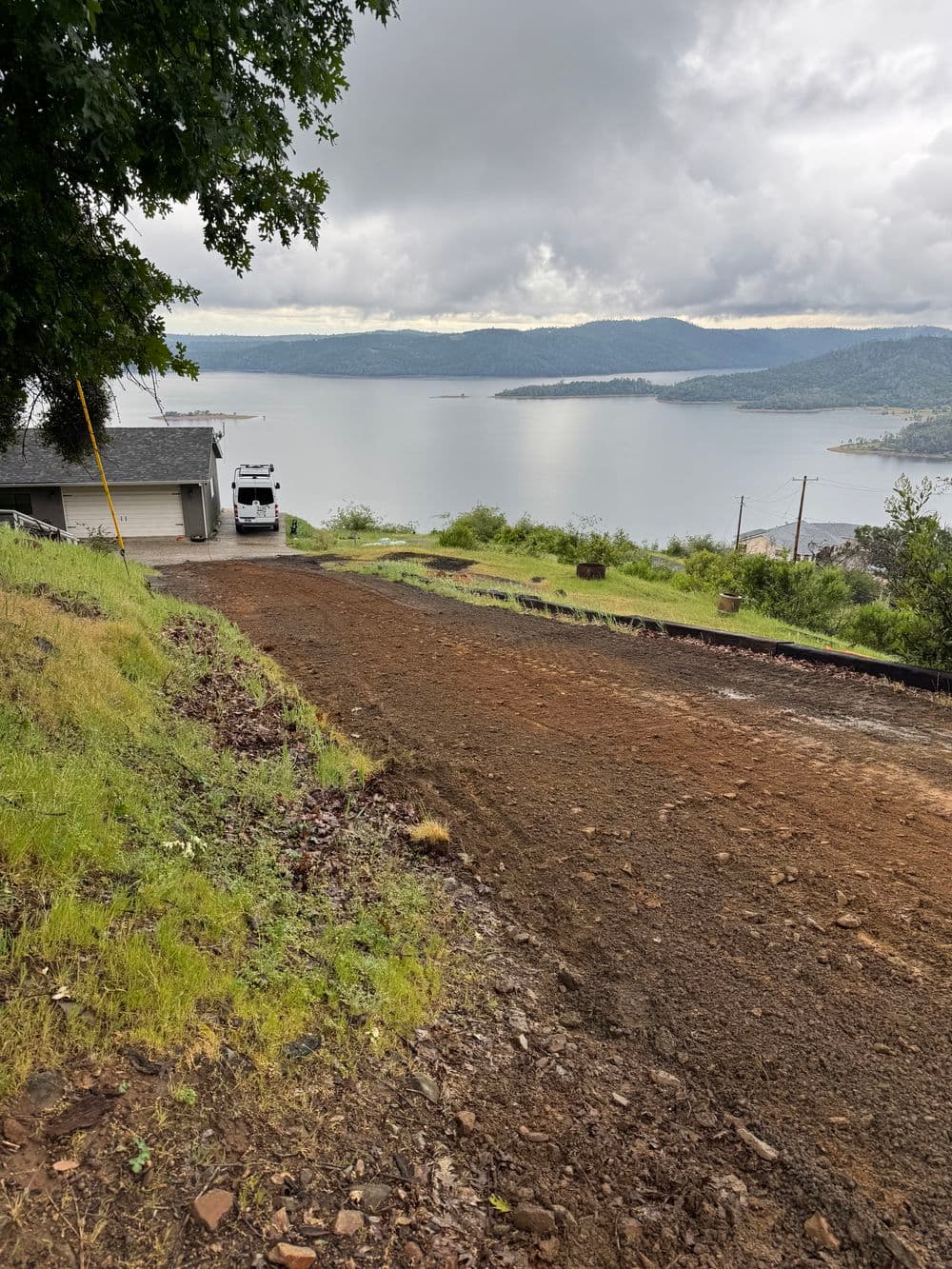
We started by digging out all the protruding rocks and clearing the surface down to a workable base. From there, we graded the entire driveway to get a smooth, consistent slope. On a hillside property like this one near Lake Oroville, getting the grade right matters - water needs somewhere to go, and a properly sloped surface keeps it from pooling or washing out the material over time.
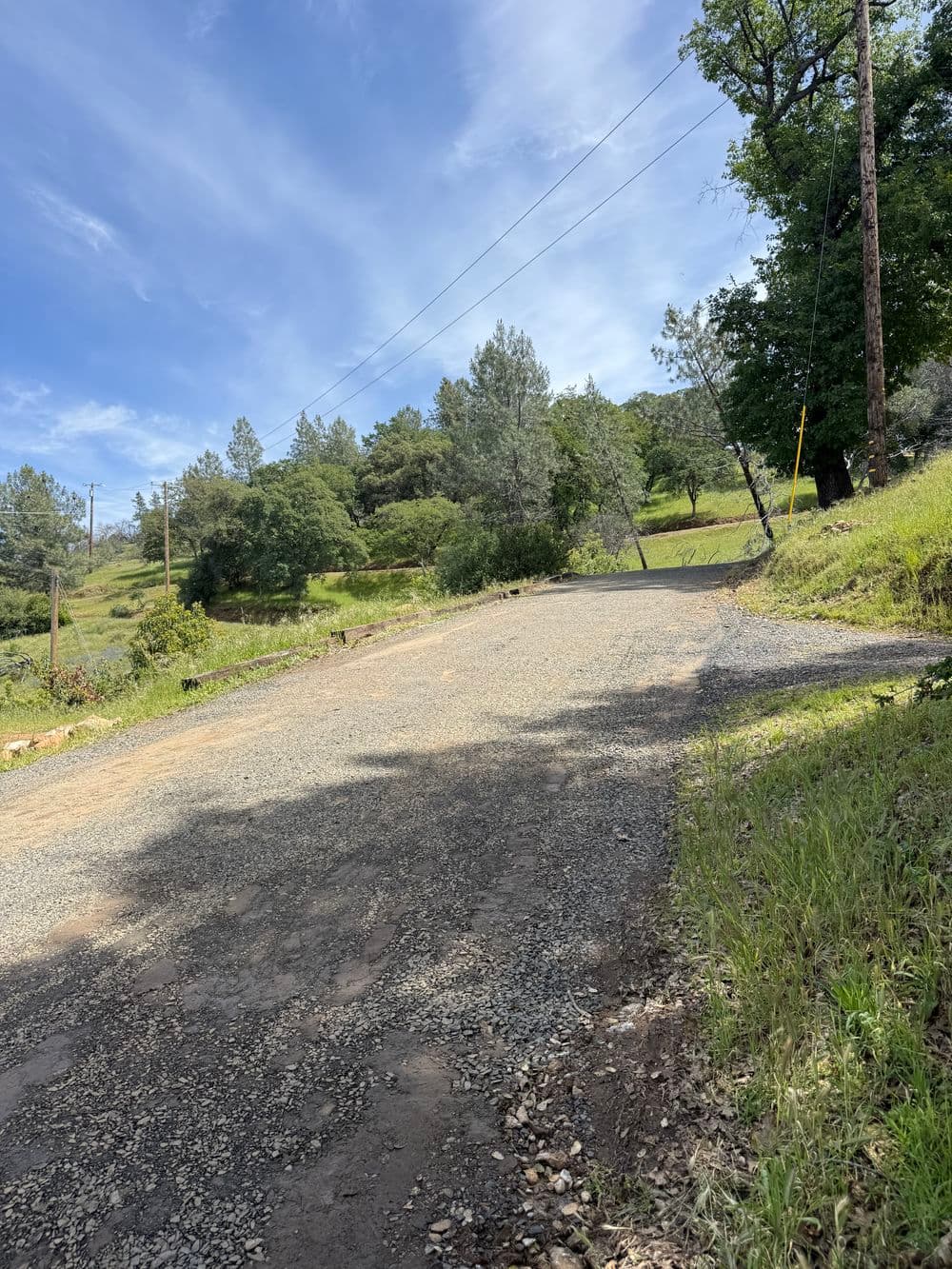
Once the grading was done, we brought in 3/4" base rock and laid a 2" layer across the full length of the driveway. Base rock is the right call for a job like this. It compacts tight, drains well, and holds up under vehicle traffic far better than plain dirt or loose gravel. It's not the cheapest option, but it's the one that actually lasts.
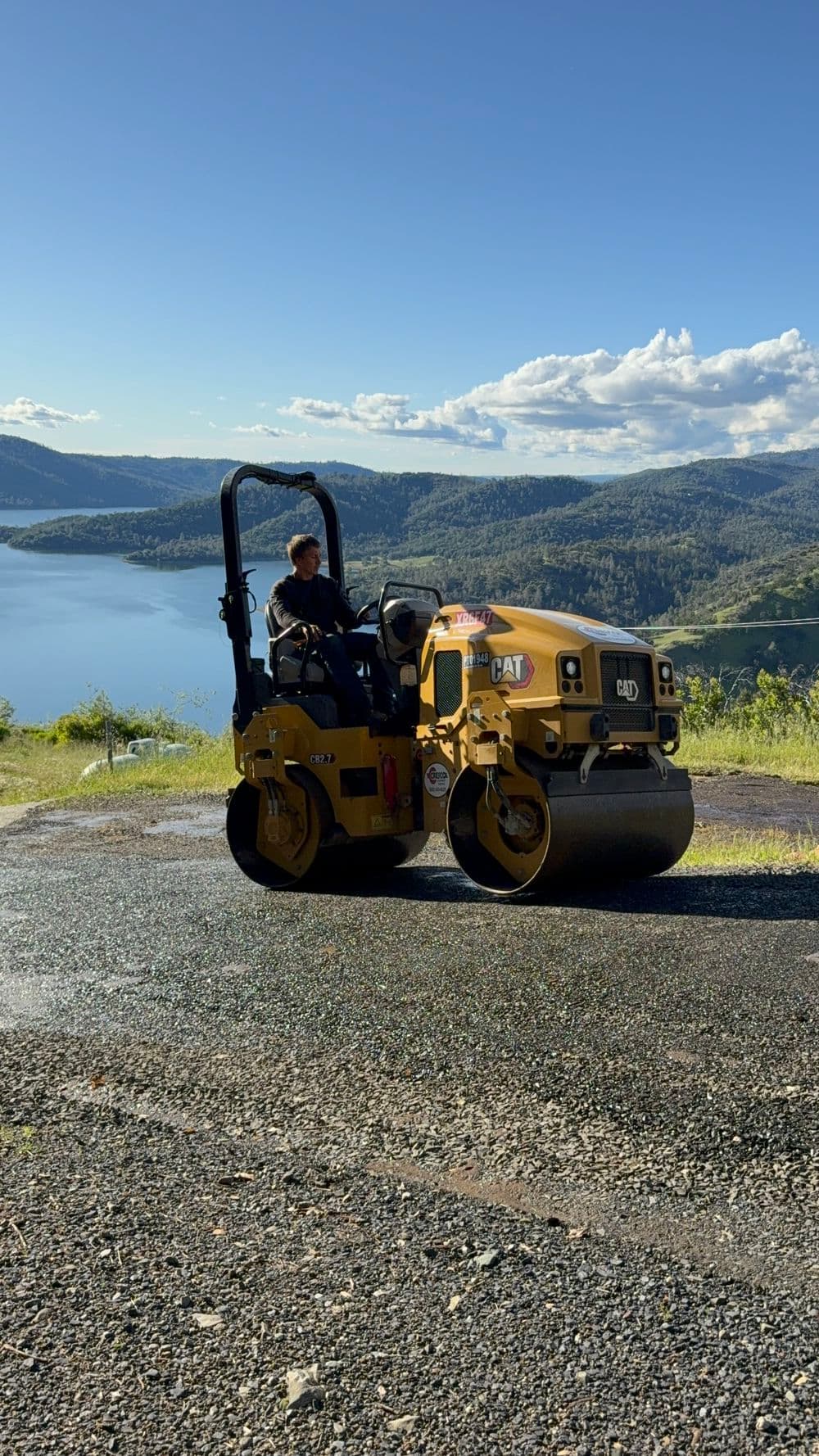
The final step was running the roller over the entire surface. Compaction is what separates a driveway that stays solid from one that shifts, ruts, and breaks down after a few months. Rolling it down locks everything in place and gives you a firm, stable surface from top to bottom. The difference between before and after on this one was hard to miss.
Properties out in the Oroville hills deal with this kind of thing pretty regularly - steep grades, rocky soil, and driveways that take a beating. Getting the foundation right from the start is what keeps you from having to redo it every couple of years.